TX Rodent Control
Rodent Exterminator in Lavon, TX
Updated
Lavon's housing is new. Census estimates show 88.5% of the city's housing units were built in 2000 or later, and 89.3% are single-family detached homes. In a subdivision that was a field not long ago, rodents were on the land first. The houses arrived with fresh gaps, and many back onto ground that is still open or still being built on.
Source: U.S. Census Bureau, American Community Survey 5-Year Estimates, 2019-2023, table B25034; U.S. Census Bureau, American Community Survey 5-Year Estimates, 2019-2023, table B25024
No obligation · Same-day service in many areas
Service Lines, Thresholds and an Open Garage
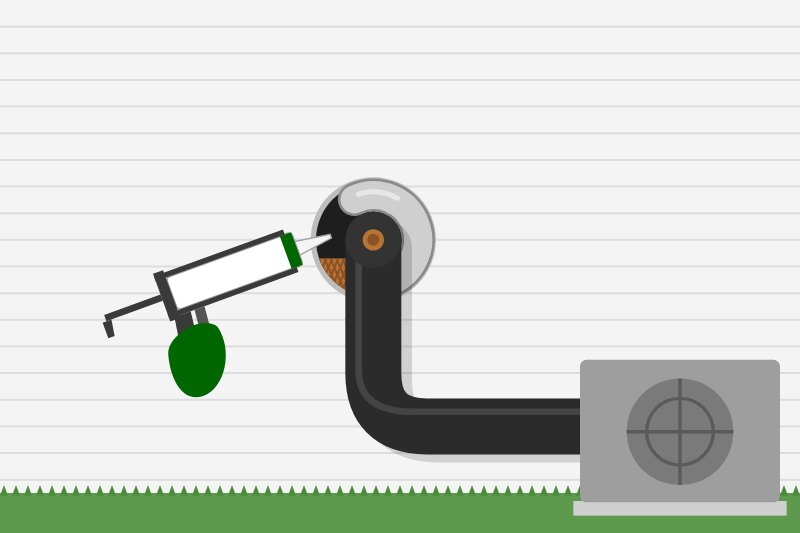
Cable and Electric Entries
Service lines enter through holes drilled on site and are often sealed with a dab of putty. Check each one on the outside wall and repack it with mesh and sealant.
Back Door Threshold
Patio and back doors settle as a new slab cures, opening a gap at one corner. Adjust the threshold or add a sweep so no light shows underneath.
Garage Left Open
An open garage at dusk is the easiest entry of all. Mice walk in and hide behind storage. Close the door when you are not using it and keep the walls clear.
Rodents a New Lavon Homeowner Should Know
House Mouse
The mouse you find indoors is nearly always a house mouse: uniform grey-brown, with a tail as long as its body and almost no fur on it. It breeds inside walls and cabinets. Fresh droppings appear daily near food. Check the pantry, the laundry room and the garage shelving for them.
Norway Rat
A Norway rat has a broad head, a thick body and a scaly tail shorter than the body. It digs burrows in soft, recently turned soil, which new yards have plenty of. Look along the fence, beside the foundation and around sod edges for holes and for flattened paths in the grass.
Roof Rat
The roof rat is the rat of fences and rooflines, thin and dark with a very long tail. New neighborhoods have few tall trees, so it uses fence tops and utility lines to reach a house. Look for droppings on top of the fence rail and listen for scurrying in the ceiling.
Where Rats Settle in a New Lavon Neighborhood
In a young neighborhood, rats settle where the ground stays undisturbed. Drainage easements, retention pond banks, vacant lots waiting for a builder and stacks of construction material all qualify. From there they forage into yards at night. You cannot clear the easement yourself, but you can make your yard a poor stop. Keep trash carts shut, bring pet bowls in and avoid ground-level bird feeding. Report burrows on common land to the homeowners association. The rat control guide covers traps for the yard and the attic.
What to check
- Look along the back fence where it borders an easement or pond.
- Check for holes where new sod meets the foundation.
- Look under the trash cart area for droppings.
Field Mice, House Mice and a New Lavon Home
With 89.3% of Lavon units detached, each household deals with its own mice. Many arrive in the first cool weeks after a nearby field is cut or graded. They come in at ground level through the garage, weep holes and the gap under the back door, then nest in wall insulation near the kitchen. Trap right away, since a pair of mice multiplies fast indoors. Keep the garage door down in the evening and store pantry food in rigid containers. The mouse control guide explains trap choice and placement.
Source: U.S. Census Bureau, American Community Survey 5-Year Estimates, 2019-2023, table B25024
What to check
- Check the bottom of the back door for a gap at the threshold.
- Look inside the cabinet over the refrigerator, which is rarely opened.
- Inspect the garage shelves and the floor beneath them.
A Short List of Repairs for a Recent Build
Exclusion in Lavon is usually a short list. Because 88.5% of units were built in 2000 or later, the materials are sound and the gaps are predictable: weep holes, the electrical and cable entries, the refrigerant line sleeve, attic vents and door sweeps. One careful afternoon with a ladder and a flashlight finds most of them. Close each with metal mesh and exterior sealant, and fit covers on weep holes. Do it before cold weather if you can. The rodent exclusion guide describes professional sealing.
Source: U.S. Census Bureau, American Community Survey 5-Year Estimates, 2019-2023, table B25034
What to check
- Find where the cable and electric service enter and check the seal.
- Look at the lowest row of brick for open weep holes.
- Check each attic vent for a screen that covers the whole opening.
Lavon Is Almost Entirely Recent Detached Housing
Year built, share of housing units
88.5%
Built 2000 or later
±10.0 points
Source: U.S. Census Bureau, American Community Survey 5-Year Estimates, 2019-2023, table B25034
Building type, share of housing units
89.3%
Single-family detached
±4.2 points
Source: U.S. Census Bureau, American Community Survey 5-Year Estimates, 2019-2023, table B25024
Two shares carry the story on Lavon's housing cards. Homes built in 2000 or later are 88.5% of housing units, and single-family detached homes are 89.3%. Lavon is small, so the Census estimates for older homes and for apartment buildings come with margins too wide to print, and the cards leave them out.
Source: U.S. Census Bureau, American Community Survey 5-Year Estimates, 2019-2023, table B25034; U.S. Census Bureau, American Community Survey 5-Year Estimates, 2019-2023, table B25024
Lavon Dam Station Months for Lavon Homes
Average low at or below 40F
January, February and December
Highest average highs
July and August
Source: NOAA National Centers for Environmental Information (NCEI), 1991-2020
Station: Lavon Dam, TX co-op weather station
For Lavon, the nearest station with a full temperature record is the Lavon Dam, TX co-op weather station. In its NOAA normals, January, February and December are the months with an average low at or under 40F, and July and August carry the highest average highs. Field rodents tend to head indoors as the December cold arrives. Texas A&M AgriLife Extension's rodent training places the Norway rat's breeding peaks in spring and fall, a reason to check easement fences for burrows in those seasons.
Source: NOAA National Centers for Environmental Information (NCEI), 1991-2020; Texas A&M AgriLife Extension Service, accessed 2026
Construction Stage and Easements Affect a Lavon Job
Stage of the Neighborhood
In a section still under construction, new rodents keep being pushed in. A finished section with fenced yards usually needs less follow-up.
Easement or Pond Behind the Lot
A lot that backs to a drainage easement or pond bank has steady pressure from that side and may need traps or stations kept in place along the fence.
How Far Mice Have Spread
Mice caught early are a kitchen and garage job. Once they are in several rooms and the attic, more traps, visits and cleanup are involved.
Lavon Homes, Utility Districts and Nearby Cities
This guide is for homes inside the City of Lavon, which Collin County includes when it lists its cities and towns. Princeton, Garland, Josephine and Allen have their own guides on this site. Some newer subdivisions with a Lavon mailing address lie outside the city limits in a utility district, where city services do not apply. Your closing documents or appraisal record show which you are in.
The Texas service area guide lists Lavon under Collin County, along with Lucas and 12 other cities.
Lavon Questions on New Homes Near Open Fields
The land had rodents before it had houses. Grading and building remove their cover, and finished homes offer warmth and food. New construction also leaves small openings at ground level. The pressure eases as lots fill in and yards are fenced, but each house still needs its gaps sealed.
The easement usually belongs to the city, a utility district or the homeowners association, so check before placing anything on it. On your side, keep the fence line clear, close gaps under the fence with buried mesh and set traps in covered boxes. Report burrows on the easement to whoever maintains it.
During the day it matters less. The risk is around dusk and after dark, when mice are moving. Close the door before evening, keep food and seed out of the garage or in sealed cans, and store items on shelves so you can see the floor along the walls.
Soft, watered soil is easy to dig, and thick ground cover hides burrows. Leave a strip of rock or bare ground between plantings and the foundation, avoid deep mulch against the house and check new beds for holes during the first season.
Right away. Mice breed fast, and one seen in the open usually means more out of sight. Set several snap traps along walls near where you saw it, remove open food and check the traps each morning. If you are still catching mice after a week or so, look harder for the entry point.
Free Lavon Rodent Inspection
A mouse in the pantry of a house you just moved into? Calling connects a Lavon homeowner with a trusted local pest pro, and nothing gets scheduled without your say.
(888) 733-3114No Obligation · Same-Day Service in Many Areas
- A local rodent control company picks up.
- They ask what you have seen and where.
- No obligation. Ask about an inspection and pick a time.
Start again at RodentExterminator.com.
Lavon Sources
- U.S. Census Bureau, American Community Survey 5-Year Estimates, 2019-2023, table B25034
- U.S. Census Bureau, American Community Survey 5-Year Estimates, 2019-2023, table B25024
- NOAA National Centers for Environmental Information (NCEI), 1991-2020
- Texas A&M AgriLife Extension Service, accessed 2026
- Collin County, Texas, accessed 2026