Skip to content
Call (888) 733-3114
Call Now

Professional Rodent Control Services

Rodent Removal: Live and Dead Rodents

Removal of live and dead rodents from walls, crawl spaces, and garages, plus the odor a dead rodent leaves behind and a plan to address entry points and reduce recurrence.

Find Rodent Removal in Your City

Free Inspection · Same-Day Service

Call (888) 733-3114

What Rodent Removal Actually Involves

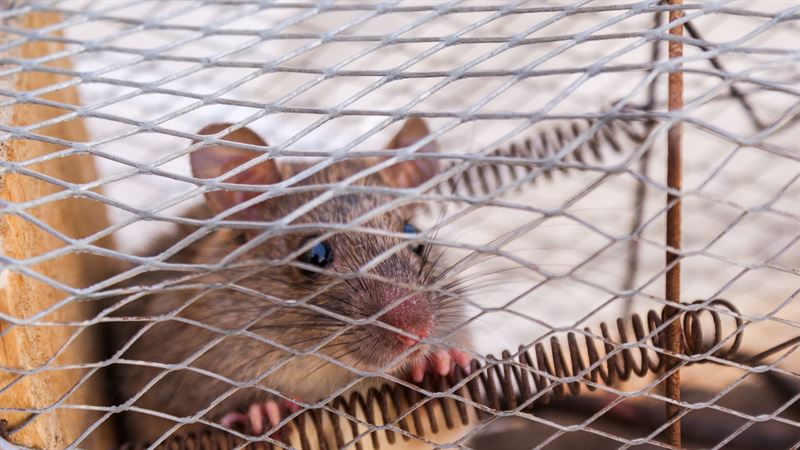
Rodent removal covers live rodents and dead ones: trapping active populations, locating and extracting dead rodents from wall voids, crawl spaces, and garages, then cleaning up droppings and treating the odor. It is broader than trapping alone and more focused than a full pest control contract.

Most rodent removal calls fall into two categories. The first is active removal: rodents are currently in the home, and the homeowner wants them out quickly. The second is dead-rodent removal: an odor has developed because a rodent died inside a wall, attic, or crawl space, and the carcass needs to be located and extracted. Both require different techniques but both fit under the same service umbrella.

A well-run rodent removal job is structured: inspection, trap deployment or carcass location, extraction, cleanup, and sanitation. Ask how each step will be documented, and treat the work as complete only when the rodents are gone and the affected areas are restored to a safe condition.

How Professional Rodent Removal Works

Rodent removal works in four steps: an assessment of whether rodents are active or dead, trapping or carcass location, removal of droppings and nesting material, and odor treatment with a follow-up inspection.

  1. Step 1: Assessment of Active vs Dead Rodent Situation

    The first step is identifying whether rodents are currently active, a carcass needs to be located, or both. Active populations show fresh droppings, recent gnaw marks, and nighttime noises. Dead rodent situations show odor, fly activity, and no fresh evidence. The assessment determines whether the job starts with trapping or with carcass location.

  2. Step 2: Live Trapping or Carcass Location

    Active populations are trapped using professional snap traps along runways. Dead rodents are located by odor tracking, sometimes with specialized equipment, and extracted by cutting the smallest possible access opening. Both approaches prioritize minimal damage to the structure while fully resolving the problem.

  3. Step 3: Contamination Removal and Sanitation

    Droppings and nesting material get removed and bagged for disposal. Cleanup crews wet the area down with an EPA-registered disinfectant before touching anything, since dry sweeping is what puts pathogens into the air. Soiled attic insulation is handled as part of Attic Rodent Removal.

  4. Step 4: Odor Mitigation and Verification

    Dead rodent odor requires enzymatic treatment that breaks down the proteins causing the smell, not just masks it. Follow-up inspection verifies the odor source was fully removed and the sanitation was effective. Insurance documentation is provided if the homeowner intends to file a claim for rodent damage.

What Affects the Cost of Rodent Removal?

Rodent removal is priced on how many trapping visits the job needs and how hard the activity is to reach. Rodents in an open garage or unfinished basement cost less to address than rodents in a finished, occupied room or a tight crawl space.

Cleanup is separate work from trapping and carcass removal, and it can be a significant part of the total. Check whether a quote includes it, offers it as an option, or excludes it entirely.

What a written quote should itemize, from the trapping plan to follow-up, is covered in the homeowner guide to rodent control costs.

Live Capture Versus Lethal Trapping: The Honest Tradeoff

Homeowners often ask about live capture for ethical reasons, and the reality is more nuanced than marketing suggests. Live traps catch rodents alive, but the relocation that typically follows has a high mortality rate. Studies of relocated rodents show most die within days from predation, inability to find food, or exposure. The ethical benefit of live capture is largely cosmetic.

Professional rodent removal uses properly set snap traps for interior work because they kill instantly and reliably. A well-placed snap trap produces a faster and more humane death than live trapping followed by relocation. For the rare situation where live capture is legally required, such as certain protected species, the professional uses the appropriate equipment and handling protocols.

The more meaningful ethical question is whether the rodent control program addresses the attractants and entry points that drew the animal in. A property that simply traps and replaces rodents indefinitely is less humane long-term than one that makes the property unsuitable for rodent occupation in the first place.

Dead Rodent Odor: Why It Happens and How to Resolve It

A dead rodent inside a wall or crawl space smells because decomposition releases gases that are unmistakable even at very low concentrations, and how long the odor lasts depends on temperature, humidity, and the size of the carcass, with no exact timetable. Resolving it typically means locating the carcass, checking an adjoining attic or crawl space first, and removing it if it can reasonably be reached, then treating the surrounding material with an enzymatic product rather than masking the smell. Where the carcass cannot be reached, managing the odor while decomposition finishes is sometimes the faster route.

The guide to a dead rodent smell in a wall covers how the source is narrowed down and when opening the wall makes sense.

Insurance Coverage for Rodent Damage and When It Applies

Homeowner insurance policies generally exclude rodent damage, treating it as a maintenance issue rather than a covered event. Whether any coverage applies depends entirely on the cause of loss, your specific policy wording, exclusions and endorsements, your jurisdiction, and the facts of the claim. In some cases a covered peril that results from rodent activity, such as a fire caused by gnawed wiring, may be treated differently from the rodent damage itself, but this is not guaranteed and only your insurer or adjuster can determine coverage.

Documentation can help you and your insurer evaluate a claim: photos of entry points, records of the scope of infestation, and invoices for remediation work. Ask the company that does the work for copies. Documentation does not establish coverage, however. Homeowners who think a claim may apply should contact their insurer or adjuster and review their policy directly.

As a general rule, the best financial outcome is to prevent the damage in the first place through early intervention and exclusion. Left unaddressed, rodent damage can accumulate well beyond the cost of professional removal and exclusion.

Common Mistakes Homeowners Make With Rodent Removal

The removal mistakes that create larger problems than the original infestation.

  1. Mistake 1: Sweeping or vacuuming droppings before disinfection.

    Dry sweeping or vacuuming of rodent droppings can send pathogens into the air, including hantavirus associated with deer mouse droppings. CDC guidance calls for wetting everything down before touching it: an EPA-registered disinfectant, or a fresh bleach-and-water mix, given the label’s full contact time before the material is bagged and removed with gloves on. A heavier job or a tight space is not a time to skip a respirator. Sweeping or vacuuming first is a health risk.

  2. Mistake 2: Trying to mask dead rodent odor with air fresheners.

    Air fresheners, candles, and sprays temporarily cover the smell but do not remove the source. The odor returns immediately once the masking agent dissipates. Resolving dead rodent odor requires locating and extracting the carcass, then enzymatic treatment of surrounding materials.

  3. Mistake 3: Cutting large wall openings to find a dead rodent.

    Careful location work narrows a dead rodent to a small area, so the access cut can stay small and patch cleanly. Cutting on a guess often means opening far more wall than needed. Narrow the location before cutting.

  4. Mistake 4: Removing rodents without addressing entry points.

    Removal without exclusion is a temporary fix. Rodents tend to come back through the same openings within weeks. A proper removal job either includes exclusion or explicitly identifies the follow-up exclusion work needed to make the removal last.

What Separates Professional Rodent Removal From DIY

The difference is in the work around the trapping: safely removing droppings without aerosolizing pathogens, locating dead rodents in walls without tearing up drywall, sanitizing contaminated areas properly, and documenting the work for insurance or real estate purposes. Basic trapping is something most homeowners can do. A pest professional does these tasks routinely and has the equipment and protocols to do them safely.

For active populations, a professional removal job typically concludes faster than DIY efforts because the trapping is more effective and the exclusion is built in. For dead rodent situations, professional removal is almost always faster and less destructive to the home than homeowner attempts, because locating a carcass inside a wall without proper tracking methods is extremely difficult.

Priority Markets

Rodent Removal in These Texas Cities

Common Questions About Rodent Removal

  • Response times are set by the local pro you reach, so ask when they can inspect. Same-day service is available in many areas. If a dead rodent is the problem, say so on the call, because the odor usually builds over the first few days before it peaks.

Get the Rodents Out Completely

Call to get a trusted local pro out for removal, cleanup and sanitation.

Find Service in Your State

Free Inspection · Same-Day Service

Get help from a rodent exterminator near you.

Call Now(888) 733-3114