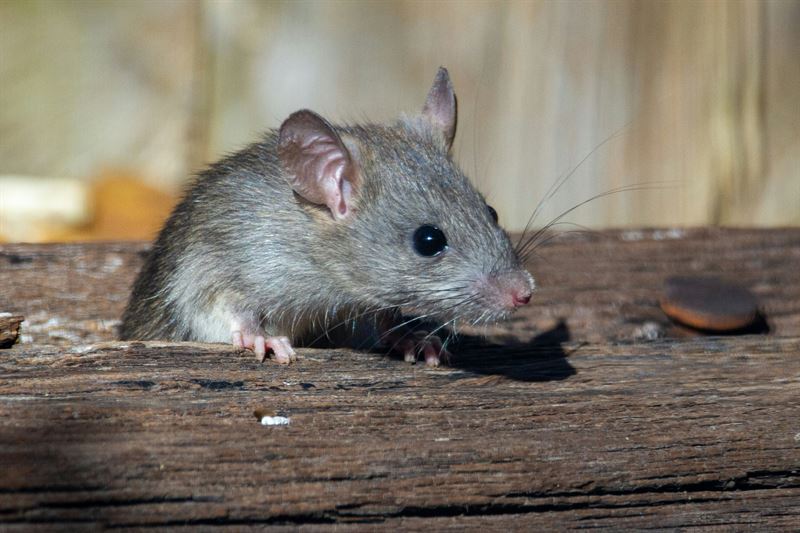
Why Poison Is the Wrong Approach for Home Rat Control
When a rat eats poison bait, it does not die instantly. Most rodenticides are anticoagulants that cause internal bleeding over 3 to 7 days. During those days, the rat continues its normal routine, which means returning to nesting areas in walls, attics, and crawl spaces to die, where the carcass can be out of reach.
The marketing for rat poison focuses on quick kills, but the math does not work out for residential interior use. A dead rat in an accessible area can be removed and the problem ends. A dead rat inside a wall creates a decomposition odor that has no fixed timetable, because how long it lingers depends on the rat's size and on the temperature and humidity in the cavity. The carcass also attracts blow flies that lay eggs in it, and sometimes the wall has to be opened to locate and remove the body. The smell alone is often worse than the original rat problem.
This is why careful rat control in residential interiors relies on trapping. Traps show each kill, let the carcass be removed right away, and make it possible to monitor the population until it is cleared. Exterior bait stations at the perimeter may be appropriate in some situations, but interior poison use creates more problems than it solves.