TX Rodent Control
Rodent Exterminator in Josephine, TX
Updated
Josephine is a small city with new neighborhoods set among working farmland. Census estimates put 94.9% of its housing units in single-family detached homes and 82.3% of units in the group built in 2000 or later. A house that looks out on a crop field or pasture has rodents for neighbors. They stay outdoors most of the year and come looking for shelter when the field is cut or the weather turns.
Source: U.S. Census Bureau, American Community Survey 5-Year Estimates, 2019-2023, table B25024; U.S. Census Bureau, American Community Survey 5-Year Estimates, 2019-2023, table B25034
No obligation · Same-day service in many areas
Fuel Lines, Conduit and the Field Side
Propane and Gas Line Entry
Fuel lines enter through a drilled hole that is easy to leave oversized. Look at the wall behind the tank side of the house and have the opening packed and sealed.
Conduit to Outbuildings
Buried conduit that carries power to a shop or shed can act as a tunnel if its ends are open. Seal around the wires at both ends with a product made for conduit.
Field-Side Garage Corner
The garage corner facing open land gets the most traffic. Check the door seal and the trim at that corner closely, and keep storage away from it.
Weep Holes Near the Ground
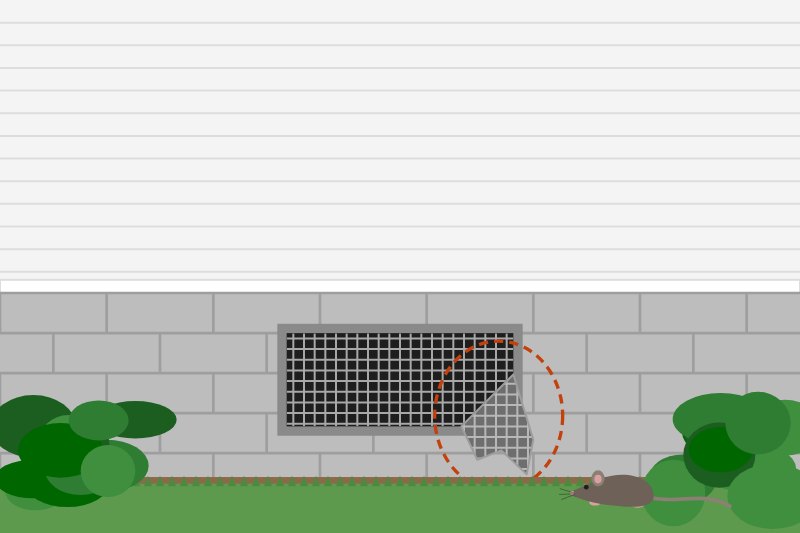
Low weep holes along the brick are within easy reach of field mice. Insert covers that keep the wall draining while closing the gap.
House Mouse or Norway Rat Near Josephine Fields
House Mouse
A house mouse is a slight, grey-brown rodent with a tail about the length of its body. It moves into buildings and stays. You will find its droppings, each a small dark sliver, along baseboards and in cupboards, and you may smell a stale odor where a nest has been in use for a while.
Norway Rat
Where grain or animal feed is stored, look for the Norway rat. It is big and brown, with a blunt snout and a tail shorter than its body. It burrows under sheds, coops and concrete. Its droppings are thick with blunt ends, and its runways show as worn tracks along walls.
Grain, Livestock and Rats at the Edge of Josephine
Rats at the edge of town live on what farms and backyards provide. Stored grain, deer corn, chicken feed and garden vegetables all draw them. If you keep any of these, keep them in metal containers and clean up what spills. Rats shelter under sheds and in stacked materials, so raise storage off the ground and leave space to see behind it. A yard that borders a field should have a mowed strip along the fence, which makes rats cross open ground. The rat control guide explains trapping near outbuildings.
What to check
- Look under the shed or coop for burrow entrances.
- Check feed and deer corn containers for gnawed lids.
- Walk the fence beside the field and look for worn runways.
Harvest and Cold Send Mice Toward Josephine Houses
Mice move in waves here. When a nearby field is harvested or plowed, they lose their cover in a day and head for the nearest buildings. With 94.9% of Josephine units detached, each house takes that pressure by itself. Get ahead of it: seal the low gaps, set traps in the garage and keep the garage door closed in the evenings around harvest. Indoors, keep food in jars or bins and check behind the stove and under sinks. The mouse control guide covers how many traps to set and where.
Source: U.S. Census Bureau, American Community Survey 5-Year Estimates, 2019-2023, table B25024
What to check
- Check the garage corners nearest the field side of the house.
- Look under the kitchen and bathroom sinks at the pipe openings.
- Inspect stored seed, bird food and pet food for chewed bags.
Sealing a Newer House That Faces Open Country
Exclusion is the sealing work that holds after the traps come out. Most Josephine housing is recent, with 82.3% of units built in 2000 or later, so the repairs are small and specific. Cover weep holes, screen vents with hardware cloth and pack the openings for water, power and propane or gas lines with metal mesh. Rural lots often have a few extra penetrations for wells, septic systems or outbuilding power. Find them all and close each one. The rodent exclusion guide lists what a full job includes.
Source: U.S. Census Bureau, American Community Survey 5-Year Estimates, 2019-2023, table B25034
What to check
- Find the propane or gas line entry and check that it is sealed.
- Look for conduit running to a shed or shop and check both ends.
- Check foundation and soffit vents for whole, tight screens.
Detached Homes, Most From 2000 or Later
Year built, share of housing units
82.3%
Built 2000 or later
±17.6 points
Source: U.S. Census Bureau, American Community Survey 5-Year Estimates, 2019-2023, table B25034
Building type, share of housing units
94.9%
Single-family detached
±13.5 points
Source: U.S. Census Bureau, American Community Survey 5-Year Estimates, 2019-2023, table B25024
Josephine is small, so the Census estimates are firm enough to show for just two shares. Single-family detached homes are 94.9% of units, and 82.3% of units were built in 2000 or later. Older age bands and the apartment share carry margins of error too wide to show, so the cards skip them.
Source: U.S. Census Bureau, American Community Survey 5-Year Estimates, 2019-2023, table B25024; U.S. Census Bureau, American Community Survey 5-Year Estimates, 2019-2023, table B25034
Lavon Dam Station Months Applied to Josephine
Average low at or below 40F
January, February and December
Highest average highs
July and August
Source: NOAA National Centers for Environmental Information (NCEI), 1991-2020
Station: Lavon Dam, TX co-op weather station
Josephine takes its cold and hot months from NOAA normals for the Lavon Dam, TX co-op weather station, where December starts a run of average lows at or under 40F that lasts through January and February. The hottest stretch is July and August. Seal the house before harvest and the first cold nights. Texas A&M AgriLife Extension says in its rodent course that Norway rats breed most heavily in spring and fall, so sheds and coops deserve a check for new burrows in both seasons.
Source: NOAA National Centers for Environmental Information (NCEI), 1991-2020; Texas A&M AgriLife Extension Service, accessed 2026
Feed, Fields and Extra Lines in Josephine
Feed and Grain on Site
Stored feed, deer corn or a chicken coop keeps rodents fed and close. Properties with these need more trapping and sturdier storage than a house without them.
Open Land on One or More Sides
A lot bordered by fields on several sides has more fence line to watch and more sides of the house facing pressure.
Extra Utility Penetrations
Wells, septic systems, propane and power runs to outbuildings each add an opening to find and seal, beyond those on a typical subdivision house.
Josephine Homes and Unincorporated Neighbors
This guide is for homes inside the City of Josephine, which is named on Collin County's page of cities and towns. Lavon, Princeton and McKinney have their own guides on this site. Plenty of nearby homes have a Josephine address but sit in unincorporated land or a utility district, where city rules do not apply. Your appraisal district record lists the jurisdictions for your property.
The Texas service area guide lists Josephine under Collin County, along with Lavon and 12 other cities.
Josephine Questions on Crops, Propane and Rural Lots
Fields are cut and nights cool at about the same time, and mice lose both food and cover. Houses nearby are the obvious refuge. Sealing low gaps and setting garage traps before harvest breaks the pattern. If mice still arrive each year, there is an opening you have not found yet.
Yes. Corn on the ground feeds rats and mice as readily as deer. Keep feeders well away from the house, store corn in a metal can with a locking lid and stop feeding for a while if you see droppings or burrows near the feeder.
They can if the hole around the line was left open. Look where the pipe passes through the outside wall. You should see sealant tight against the pipe with no gap. If you can see into the wall, have the opening filled with metal mesh and sealed. Leave any work on the line itself to your propane supplier.
Roll-up doors rarely seal well at the bottom corners. Add a brush or rubber seal along the bottom and sides, keep seed and feed out of the shop and store rags and paper in closed bins. Leave a few traps set along the walls, since a shop is hard to seal completely.
Often, yes. Snakes follow food, and rodents are a main food for many of them. Reducing rodents by storing feed properly, clearing brush and sealing buildings also gives snakes less reason to stay. Keep grass short near the house so you can see what is moving through.
Free Josephine Rodent Inspection
Mice in the garage after the field next door was cut? A Josephine homeowner can call to reach a trusted local pest pro and talk the problem over without any obligation.
(888) 733-3114No Obligation · Same-Day Service in Many Areas
- A local rodent control company picks up.
- They ask what you have seen and where.
- No obligation. Ask about an inspection and pick a time.
Or find a local rodent exterminator by phone.
Josephine Sources
- U.S. Census Bureau, American Community Survey 5-Year Estimates, 2019-2023, table B25034
- U.S. Census Bureau, American Community Survey 5-Year Estimates, 2019-2023, table B25024
- NOAA National Centers for Environmental Information (NCEI), 1991-2020
- Texas A&M AgriLife Extension Service, accessed 2026
- Collin County, Texas, accessed 2026