TX Rodent Control
Rodent Exterminator in Parker, TX
Updated
Parker's housing is as uniform as it gets. Census estimates count 100.0% of Parker's housing units as single-family detached homes, and 68.6% of units were built in 2000 or later. With no shared walls and no landlord, each owner holds the whole job. Large houses also have large roofs, and a bigger roof has more edges, vents and valleys where a rat can find a way in.
Source: U.S. Census Bureau, American Community Survey 5-Year Estimates, 2019-2023, table B25024; U.S. Census Bureau, American Community Survey 5-Year Estimates, 2019-2023, table B25034
No obligation · Same-day service in many areas
Large Roofs and Wide Garages in Parker
Roof Valleys and Dormers
Each dormer and valley has seams where flashing can lift. On a complex roof there may be many. Look for staining or bent metal at these joints from the ground with binoculars.
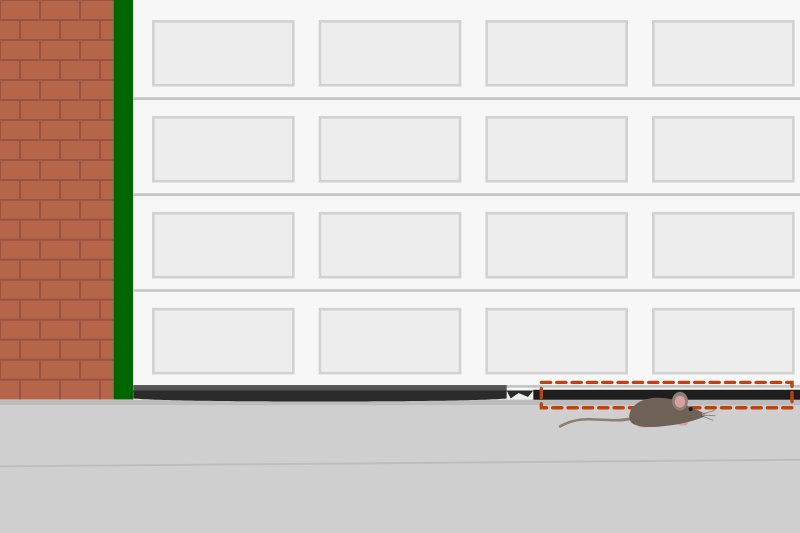
Multi-Bay Garage Doors
Wide garage doors flex, and the bottom seal wears unevenly. Check each door for gaps at the corners and along the middle where it meets the slab.
Outdoor Kitchen Connections
Gas, water and power lines for an outdoor kitchen or pool house pass through the wall of the main house. Confirm each sleeve is filled with mesh and sealed.
Attic Rat or House Mouse in a Parker Home
Roof Rat
When the noise is overhead, suspect a roof rat. It is a slender rat with a narrow face, thin ears you can almost see through and a tail longer than its body. It reaches the roof from trees or a fence and nests in attic insulation. Look for curved, pointed droppings and flattened runs.
House Mouse
A house mouse weighs very little and fits through openings a rat cannot. Its fur is dusty grey to brown and its tail is thin and lightly haired. Look for it in the garage, the pantry and the cabinet under the kitchen sink, where it leaves scattered droppings like dark grains of rice.
Open Ground and Long Driveways Give Parker Rats Room
Parker lots are large, and much of the ground is open grass or pasture. Rats do not live in the middle of a mowed field. They stay at the edges, along fence rows, brush piles, drainage culverts and the foundations of outbuildings. Mow close to fences, burn or haul off brush instead of leaving it piled and keep the area around the workshop clear. If a neighbor keeps livestock, expect rodents to travel along the shared fence. The rat control guide explains how to trap along those routes.
What to check
- Follow the fence row on foot and look for burrows under the bottom wire.
- Check both ends of any driveway culvert for nests and droppings.
- Look around the workshop slab for holes at the edge of the concrete.
A Mouse in a Parker Kitchen Came Through Your Own Wall
Since 100.0% of Parker units are detached houses, there is no neighbor's kitchen to blame. A mouse got in through a gap on your own house, most often at the garage. Multi-car garages have long door seals and several walk-through doors, and any one of them can fail. Check each seal, then follow the wall from the garage toward the kitchen and look where pipes and wires pass through. Trap inside the garage and keep bird seed and pet food in lidded cans. The mouse control guide covers the details.
Source: U.S. Census Bureau, American Community Survey 5-Year Estimates, 2019-2023, table B25024
What to check
- Check the seal on every garage bay and each side door.
- Look in the attic space above the garage for droppings.
- Open the cabinet beneath the kitchen sink and inspect the back wall.
What Sealing a Large Parker House Involves
Exclusion is the last step and the one that lasts. With 68.6% of Parker units built in 2000 or later, the usual gaps are builder gaps: open weep holes, loose ridge vents and holes cut for lines and never closed. A large house multiplies them. Expect a full inspection to cover the entire roofline, every dormer and each place a lower roof meets a wall. Ask for the gaps to be closed with metal flashing, hardware cloth and sealant. The rodent exclusion guide shows what a finished job looks like.
Source: U.S. Census Bureau, American Community Survey 5-Year Estimates, 2019-2023, table B25034
What to check
- Count the roof valleys and dormers and check each for gaps.
- Look along the ridge for vent sections that have lifted.
- Check where the outdoor kitchen gas line enters the house.
Every Parker Home Counted Is a Detached House
Year built, share of housing units
68.6%
Built 2000 or later
±12.8 points
Source: U.S. Census Bureau, American Community Survey 5-Year Estimates, 2019-2023, table B25034
Building type, share of housing units
100.0%
Single-family detached
±0.0 points
Source: U.S. Census Bureau, American Community Survey 5-Year Estimates, 2019-2023, table B25024
Parker's cards show two housing shares. Census estimates count single-family detached homes as 100.0% of housing units, and homes built in 2000 or later as 68.6%. The older age bands have wide margins, so the cards leave them out and this guide does not describe them.
Source: U.S. Census Bureau, American Community Survey 5-Year Estimates, 2019-2023, table B25024; U.S. Census Bureau, American Community Survey 5-Year Estimates, 2019-2023, table B25034
Richardson Station Months Applied to Parker
Average low at or below 40F
January, February and December
Highest average highs
July and August
Source: NOAA National Centers for Environmental Information (NCEI), 1991-2020
Station: Richardson, TX co-op weather station
Parker's cold-month and hot-month cards are read from the Richardson, TX co-op weather station, using NOAA's normals. Average lows of 40F or below show up there in January, February and December, and the highs peak in July and August. Inspect the attic and garage ahead of the first hard cold. Texas A&M AgriLife Extension training lists fall and spring as the seasons when Norway rat breeding peaks, so fence rows and outbuilding slabs get a look then.
Source: NOAA National Centers for Environmental Information (NCEI), 1991-2020; Texas A&M AgriLife Extension Service, accessed 2026
Roof Plan and Extra Buildings Set the Size of a Parker Job
Roof Size and Shape
A sprawling roof with many valleys, dormers and vents takes longer to inspect and has more to seal. The roof plan, more than the floor area, sets the amount of work.
Workshops and Pool Houses
Each extra building gets its own inspection and its own repairs. Mention detached structures when you call so the visit is planned for them.
Attic Access
Large houses often have several separate attic spaces, some reached only through small hatches. Each one has to be entered and checked for nests.
Parker Homes and the Cities Next Door
This guide is for homes inside the City of Parker, one of the places Collin County names on its cities and towns page. Allen, Plano, Lucas and Richardson have their own guides on this site. Parker shares mailing addresses with neighboring cities, so a postal address alone does not tell you which city's rules apply. The appraisal district record settles which city covers the lot.
The Texas service area guide lists Parker under Collin County, along with Plano and 12 other cities.
Parker Questions on Big Roofs, Pastures and Workshops
Field mice and other rodents were living on that ground before the house went up. Construction leaves gaps open for months, and a new house offers warmth and food. Have the builder's openings sealed, keep the garage closed and trap indoors until the catches stop.
Walk the outside each season and after any roof or utility work. Trades often leave a new hole unsealed. Look at door seals, vents and the places lines enter. A yearly look in each attic space for droppings catches a problem before it spreads through the insulation.
Yes. New roofs can have gaps where sections meet, under the first row of shingles at the eave or at vents that were never screened. Rats climb brick and downspouts easily. Age matters less than whether each joint was closed properly when the house was built.
You can make your side less inviting. Keep the fence line mowed and clear, store nothing along it and set traps in covered boxes where you see runways. Seal your own buildings so rats that cross find no shelter. A friendly word about feed storage can help too.
Any cool, quiet room with a floor drain or a line through the wall deserves a look. Check behind racks and shelving for droppings, and make sure the door has a sweep. Store dry goods in glass, metal or thick plastic, since mice chew through cardboard and thin bags.
Free Parker Rodent Inspection
Movement above the garage or droppings in the pantry? Call to reach a trusted local pest pro and describe your Parker house, with no obligation attached to the conversation.
(888) 733-3114No Obligation · Same-Day Service in Many Areas
- A local rodent control company picks up.
- They ask what you have seen and where.
- No obligation. Ask about an inspection and pick a time.
Start again at RodentExterminator.com.
Parker Sources
- U.S. Census Bureau, American Community Survey 5-Year Estimates, 2019-2023, table B25034
- U.S. Census Bureau, American Community Survey 5-Year Estimates, 2019-2023, table B25024
- NOAA National Centers for Environmental Information (NCEI), 1991-2020
- Texas A&M AgriLife Extension Service, accessed 2026
- Collin County, Texas, accessed 2026