TX Rodent Control
Rodent Exterminator in Lake Dallas, TX
Updated
Lake Dallas has more kinds of housing than most small cities nearby. Census estimates put 63.8% of its housing units in single-family detached homes, which leaves a sizable part of the city in other housing where walls, lots or management are shared. Whether you own a house or rent a unit changes who fixes what, so this guide covers both, starting with what each can check today.
Source: U.S. Census Bureau, American Community Survey 5-Year Estimates, 2019-2023, table B25024
No obligation · Same-day service in many areas
Mouse, Norway Rat or Roof Rat in Lake Dallas
House Mouse
The house mouse is the indoor rodent, small enough to hide in a toaster. It has a pointed muzzle, large rounded ears and a long tail. It feeds a little at many spots, so its droppings turn up in several rooms. Look in kitchen drawers, behind the refrigerator and in closets where food or pet supplies are kept.
Norway Rat
A Norway rat is brown, coarse-furred and heavy, with a tail shorter than its body. It burrows beside foundations and under carports, decks and trash areas. Holes about the width of a fist with packed earth around them are its work. You may also see it at dusk running along a wall.
Roof Rat
The roof rat is the agile one, with a pointed nose and a tail longer than its head and body. It travels on overhead lines, fence tops and branches. Signs include noise in the ceiling, droppings on top of the water heater and gnaw marks on fruit still hanging on the tree.
Rats Follow Food and Cover in Lake Dallas Yards
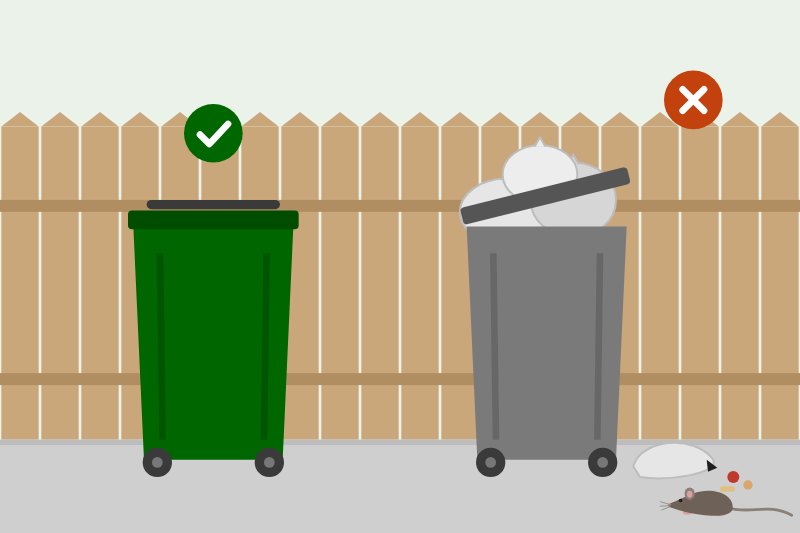
Rats need food, water and a place to hide, and a yard can supply all of them without anyone noticing. Open trash carts, a leaking hose bib, a brush pile from last year's trimming and a bag of dog food on the porch are enough. Fix the leak, haul off the brush and bring food inside. Where homes sit close together, one cluttered yard feeds rats for the whole row, so it helps to talk with neighbors or the park or complex manager. The rat control guide covers trapping outdoors and in.
What to check
- Look for burrows under the deck, steps or carport slab.
- Check that the trash cart lid closes fully and has no chewed holes.
- Look for drips at outdoor faucets and standing water nearby.
Two Kinds of Mouse Problem in Lake Dallas
A mouse problem in Lake Dallas takes one of two forms. In the 63.8% of units that are detached houses, the owner finds the gap and seals it. In housing with shared walls or shared grounds, mice pass between homes, and one household cannot fix that alone. Renters should report mice to the landlord in writing and ask that nearby units be checked too. In either case, store food in sealed containers, clear clutter from closets and set snap traps along walls. The mouse control guide gives the full method.
Source: U.S. Census Bureau, American Community Survey 5-Year Estimates, 2019-2023, table B25024
What to check
- Check the back of lower kitchen cabinets for droppings and gnawed holes.
- Look where the washer hoses and dryer vent pass through the wall.
- Ask the household next door whether they have had mice lately.
What an Owner Seals and What a Renter Requests
Exclusion means closing openings for good. Lake Dallas housing is split by age: 47.6% of units were built in 2000 or later and 41.7% between 1980 and 1999. The older group is more likely to have worn door sweeps, cracked vent covers and skirting or siding that has pulled loose at the bottom. An owner can order those repairs directly. A renter can seal small holes inside with steel wool and ask the landlord to handle doors, vents and the outside. The rodent exclusion guide explains a complete job.
Source: U.S. Census Bureau, American Community Survey 5-Year Estimates, 2019-2023, table B25034
What to check
- Look along the bottom edge of the siding or skirting for gaps.
- Check the dryer vent flap to see that it closes.
- Slide a card under each exterior door to test the sweep.
Vents, Skirting and Shared Plumbing
Dryer and Bath Vents
Exterior vent hoods have a flap that should swing shut. Lint and age hold it open, and mice walk in. Clean the hood and add a pest guard made for vents.
Loose Siding or Skirting
Panels that have pulled away from the base of a home leave a gap into the floor or wall space. Refasten them and back any hole with metal mesh.
Shared Wall Plumbing
In attached homes, pipes for neighboring kitchens and baths run through one wall. The holes around them connect the units. Each should be sealed on your side.
Carport and Porch Storage
Boxes and bags stacked on a porch or carport give mice cover right beside the door. Move storage into sealed tubs and keep the threshold clear.
A Mix of Detached Houses and Other Housing
Year built, share of housing units
41.7%
Built 1980 to 1999
±11.8 points
47.6%
Built 2000 or later
±13.5 points
Source: U.S. Census Bureau, American Community Survey 5-Year Estimates, 2019-2023, table B25034
Building type, share of housing units
63.8%
Single-family detached
±8.7 points
Source: U.S. Census Bureau, American Community Survey 5-Year Estimates, 2019-2023, table B25024
The cards above print three shares for Lake Dallas. Detached houses are 63.8% of housing units. By age, 47.6% of units were built in 2000 or later and 41.7% between 1980 and 1999. Other shares, including the one for larger apartment buildings, have Census margins too wide to print, so this guide does not put a number on them.
Source: U.S. Census Bureau, American Community Survey 5-Year Estimates, 2019-2023, table B25024; U.S. Census Bureau, American Community Survey 5-Year Estimates, 2019-2023, table B25034
Denton 2 SE Station Months for Lake Dallas
Average low at or below 40F
January, February and December
Highest average highs
July and August
Source: NOAA National Centers for Environmental Information (NCEI), 1991-2020
Station: Denton 2 SE, TX co-op weather station
The Denton 2 SE, TX co-op weather station feeds the month cards for Lake Dallas. NOAA's normals there average a low of 40F or less in December, January and February, and the warmest highs arrive in July and August. Check door sweeps, vent flaps and skirting before the coldest weeks. According to Texas A&M AgriLife Extension rodent training, the Norway rat's breeding peaks in spring and in fall, when decks, steps and carport slabs are worth checking for fresh digging.
Source: NOAA National Centers for Environmental Information (NCEI), 1991-2020; Texas A&M AgriLife Extension Service, accessed 2026
Ownership and Building Type Shape a Lake Dallas Job
Owner or Renter
An owner can approve any repair. A renter may be limited to work inside the unit, with the landlord arranging the rest, which affects what a first visit can cover.
Attached or Detached
A detached house is treated as one building. An attached home may need neighboring units inspected before sealing makes sense.
Condition of the Exterior
Loose siding, damaged skirting and broken vent hoods add repair work beyond trapping. Ask which repairs are part of the rodent job and which are separate.
Lake Dallas Owners, Renters and Nearby Cities
This page is for houses, attached homes and rentals inside the City of Lake Dallas, a Denton County city on the Denco Area 9-1-1 District's member list. Denton, Lewisville and Highland Village have their own guides on this site. Neighboring lake communities are separate towns with separate rules, so confirm which city your address is in before relying on any city service.
The Texas service area guide lists Lake Dallas under Denton County, along with Lewisville and 2 other cities.
Lake Dallas Questions From Owners and Renters
You can hire someone for the inside of your own unit, and it is wise to tell the landlord first. Repairs to the outside, the roof or shared walls belong to the owner. Report the problem in writing, keep a copy and note the date, so there is a record if the problem continues.
Shoreline brush and water give rodents cover and drink, so homes near them should keep a closer watch. What matters most is food. Keep trash closed, clean up after fishing and cookouts, and store bait, pet food and bird seed in sealed containers so the yard offers nothing to eat.
It can. Piles of stored items shelter rats, and they forage in nearby yards. Keep your own side clear, close gaps in your home and set traps along the shared fence. If the pile breaks city rules, code enforcement can require the owner to clean it up.
Size is the quick test. Mouse droppings are tiny and pointed, like dark grains of rice. Rat droppings are several times larger. Fresh ones are dark and soft, and old ones turn grey and crumble. Note where you find them and how many, since that helps a pro locate the nest.
The space under a raised floor is sheltered, and loose skirting lets rodents in. Keep the skirting intact, screen any vents in it and look underneath with a flashlight a few times a year. Remove stored items from the crawl area so nests and droppings are easy to see.
Free Lake Dallas Rodent Inspection
Mice in the cabinets or a burrow under the deck? Owner or renter, a Lake Dallas caller is connected with a trusted local pest pro and can hang up with nothing booked.
(888) 733-3114No Obligation · Same-Day Service in Many Areas
- A local rodent control company picks up.
- They ask what you have seen and where.
- No obligation. Ask about an inspection and pick a time.
Get help from a rodent exterminator near you.
Lake Dallas Sources
- U.S. Census Bureau, American Community Survey 5-Year Estimates, 2019-2023, table B25034
- U.S. Census Bureau, American Community Survey 5-Year Estimates, 2019-2023, table B25024
- NOAA National Centers for Environmental Information (NCEI), 1991-2020
- Texas A&M AgriLife Extension Service, accessed 2026
- Denco Area 9-1-1 District, accessed 2026